
Home > Botillo del Bierzo: what it is, its origin, how it is made and why you should try it in Ponferrada
Botillo del Bierzo: what it is, its origin, how it is made and why you should try it in Ponferrada
Hotel Ponferrada Plaza
Anyone who comes to Ponferrada in search of castles, routes, wine or breaks with a northern feel is bound to come across it sooner or later. And that makes sense. Because talking about El Bierzo without talking about botillo would be like visiting the area and walking straight past a very serious part of its gastronomic identity.
What is botillo del Bierzo?
Let us get straight to the point: botillo del Bierzo is a meat product made mainly from pork ribs and tail, seasoned with salt, paprika, garlic and natural spices, stuffed into the pig’s caecum, smoked and semi-cured. Botillo del Bierzo has Protected Geographical Indication (PGI) status, which guarantees a specific production method, a defined origin and clear quality standards.
That matters more than it may seem. The PGI is not there to decorate labels: it lays down which ingredients it may contain, how it must be made and what characteristics it must have. Put more simply: no, botillo is not just “a strong sausage”. It has a character all its own.
And there is something else that sets it apart: it is not eaten cured, like other sausages, but cooked. That changes everything. It changes the aroma, the texture and the whole experience at the table.
The secret lies in the smoke, the time and the paprika
If anything explains botillo’s character, it is its production process. It does not come from an improvised recipe or a modern whim. It is prepared in several clearly defined stages:
1. Selection and cutting of the raw ingredients.
2. Seasoning and stuffing.
3. Smoking with natural oak or holm oak wood.
4. Drying.
And this is worth pausing over for a moment. Because when people talk about botillo, they often stress that it is a powerful dish but less often explain that its power comes not only from the meat or the fat but also from the balance between seasoning, smoke and time.
The paprika gives it colour and depth. The smoke provides that unmistakable undertone. And the drying helps everything hold its shape. That is why, when a botillo is properly made, it does not feel coarse. It feels full-blooded, which is not the same thing.
A disputed origin
The exact origin of botillo is not entirely settled, and perhaps that is all to the good. Several theories coexist around it. Some link it to Latin references such as botellus or botulus; others place it closer to the medieval world and to the monks of Carracedo or ancient hermits in the mountains of El Bierzo.
What does seem clear is that its history goes back a long way and that its name has ancient roots. And that blend of documented history and popular memory suits botillo well. It does not need a perfect legend to hold its own at the table. It simply has to keep turning up, generation after generation, like one of those dishes born of intelligent thrift, cold weather and a cuisine that knew how to value every ingredient.
There is even a popular saying that sums up that rough-edged yet authentic character rather well: “Botillo agrietao, botillo lavao” (“A cracked botillo is a washed botillo”). In El Bierzo, it is a traditional way of saying that the casing matters: once the botillo shows cracks, it should be washed and handled carefully before cooking. In other words, the state of the skin has long been treated as a sign that the botillo is ready for the pot.
How botillo del Bierzo is traditionally cooked
The classic preparation still has something of a domestic ritual about it. The usual method is to simmer the botillo over a low heat for around two hours. Towards the end, potatoes, greens (often cabbage or collards), and a few chorizos are added.
The result is not just a dish: it is a whole serving platter that smells of home, of Sunday and of long conversation. And this is one of the keys to its success with first-time tasters in El Bierzo: botillo reaches you through its aroma long before it reaches the fork. The perfume of paprika, smoke and slow cooking is unlike much else.
Then comes the texture, which is not uniform, because it combines different cuts and different intensities. And finally there is the garnish, which is not there as an afterthought: the potatoes and greens soak up all the goodness of the broth.
It is not unusual for people to remember how that dining room smelt before they remember the exact recipe.
Much more than food: a hallmark of Bercian identity
Botillo cannot be fully understood if it is separated from its social context. It is no coincidence that it is so closely tied to winter, festivities and gatherings around the table. For generations it has been a dish associated with celebrations, Sundays and family get-togethers.
That is why it inspires such loyalty. People do not champion it for flavour alone. They champion it for what it represents. It forms part of a Bercian gastronomy in which products such as roasted peppers, chestnuts and the wines of the area also stand out, turning eating into a very real way of getting to know the land.
Trying botillo in Ponferrada makes more sense than ordering it from afar
Of course, you can buy a botillo and cook it at home. But trying it in Ponferrada, right in the heart of El Bierzo, changes the experience. First, because the product is in its natural setting. Second, because the city works extremely well as a base for discovering the comarca. And third, because here food is not separate from travel: it is bound up with the landscape, the routes and what you see during the day.
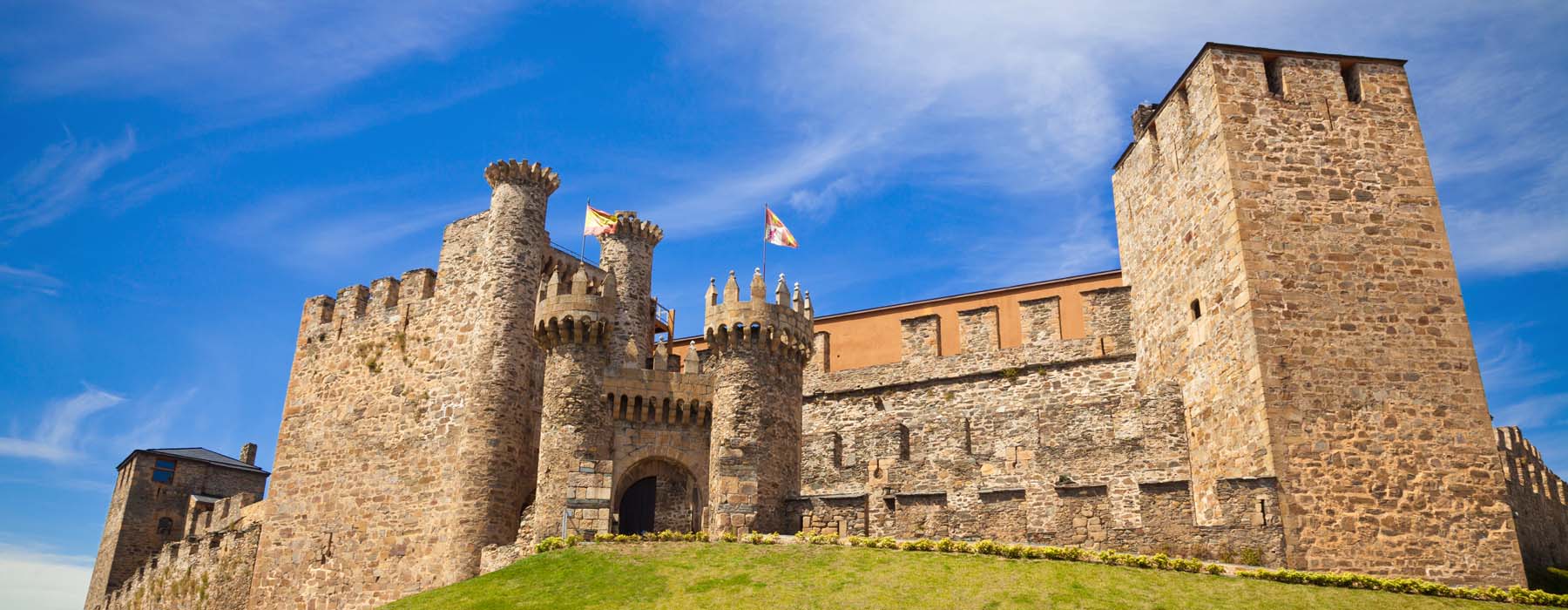
Ponferrada makes it very easy to combine heritage and gastronomy. You can visit the Castle of the Templars, stroll through the city, head to the Railway Museum or explore other corners of El Bierzo, all while realising that this comarca cannot be reduced to a pretty photograph but is instead a blend of culture, nature and the table.
And botillo fits perfectly into that picture. Because it is not a gastronomic curiosity to tick off a list. It is one of those things that help give real flavour to the place you are visiting.
One last reason to make your way to El Bierzo
There are places remembered for a monument. Others, for a landscape. El Bierzo is fortunate enough to be remembered for what is eaten there too. And botillo, with all its force, its smoke, its disputed history and its uncompromising character, remains one of its great emblems.
If you fancy discovering Ponferrada at a gentler pace, exploring El Bierzo and then sitting down to enjoy the local gastronomy as it deserves, book your stay at the Hotel Ponferrada Plaza. It will be the perfect base from which to get to know the city, explore the comarca and try flavours as authentic as botillo del Bierzo.